
ADVENT
Advent opens the liturgical year and is a season of watchful waiting, hope and preparation for the coming of Jesus Christ. In the Catholic Church, it spans the four Sundays before Christmas, leading the faithful from reflection on Christ’s Second Coming to immediate preparation for the celebration of His Nativity
WHAT IS ADVENT?
Advent, from the Latin adventus meaning “coming”, is the first season of the Catholic liturgical year. It begins four Sundays before Christmas and prepares the faithful to celebrate the birth of Jesus Christ while also looking forward to His Second Coming at the end of time. It is a season of prayer, reflection, conversion and spiritual expectation.
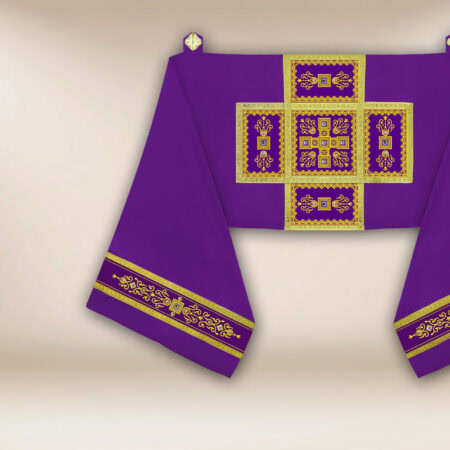
During Advent, violet liturgical vestments are traditionally worn as a sign of penance, contemplation and hope. The exception is the Third Sunday of Advent, known as Gaudete Sunday, when rose vestments may be worn to express the joy of the Lord’s Nativity drawing near.
FOUR SUNDAYS
Advent includes four Sundays, each marking another stage in the Church’s journey of expectation
WATCHFUL WAITING
A season of prayer, spiritual attentiveness and preparing our hearts for the coming of Jesus
HOPE
Advent is a season of hope in the fulfilment of God’s promises
JOY
Joyful anticipation of the Saviour’s birth brings peace and gladness
ADVENT SYMBOLS AND THEIR MEANING
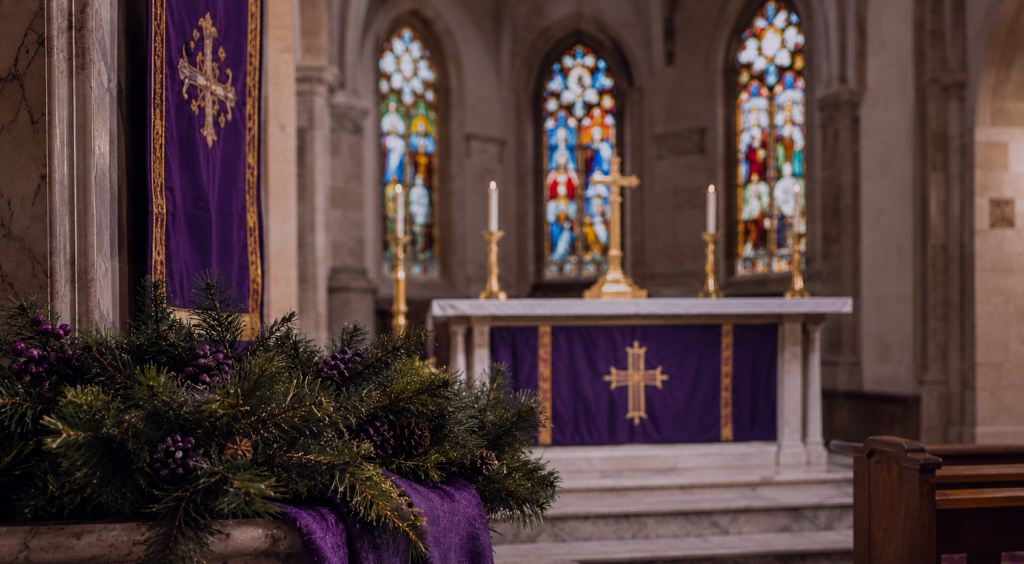
The best-known symbols of Advent remind us to remain watchful, hopeful and ready for the Nativity of the Lord. They help the faithful enter more deeply into each successive week of the season.
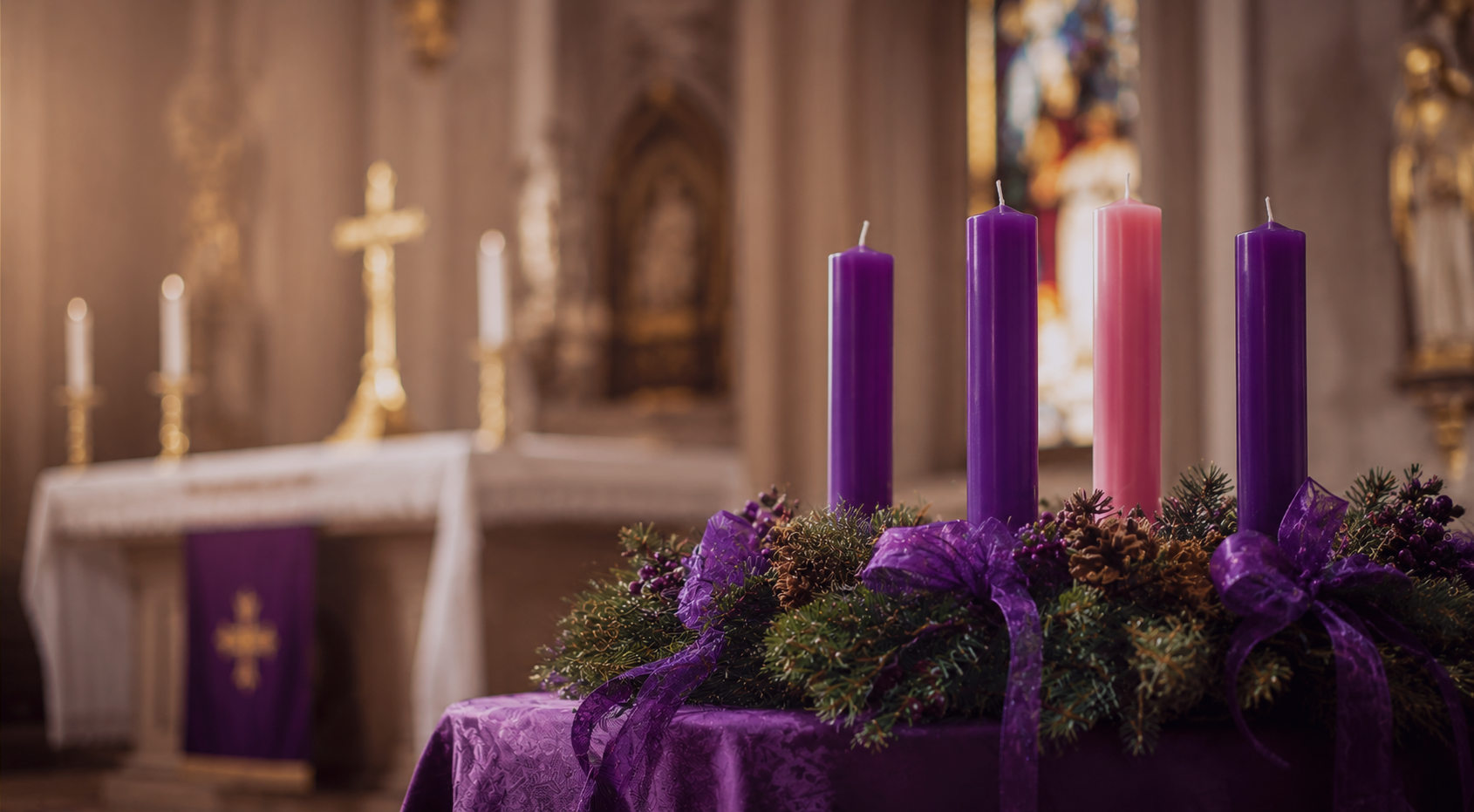
The Advent wreath holds four candles representing the four Sundays of Advent. The candles are lit one by one, symbolising the approaching coming of Christ. Three are traditionally violet, while the candle lit on the Third Sunday of Advent may be rose.
The wreath is more than an Advent decoration. Its meaning is closely connected with prayer, watchfulness and joyful preparation for Christmas.
Advent candles symbolise Christ’s light drawing ever nearer. Each newly lit candle reminds us that the celebration of the Nativity of the Lord is approaching.
The Rorate candle, also known as the Marian candle, represents the Blessed Virgin Mary, who awaited the birth of Christ in faith. During a Rorate Mass, it is traditionally placed near the altar.
Rorate Mass lanterns are signs of readiness and watchfulness. They recall the Gospel call to await the Lord’s coming with lamps burning.
THE FOUR SUNDAYS OF ADVENT
I SUNDAY OF ADVENT
The First Sunday of Advent begins a new liturgical year. The readings call the faithful to be ready for the coming of Christ and encourage a more attentive and ordered spiritual life

II SUNDAY OF ADVENT
The liturgy of the Second Sunday presents St John the Baptist and his call to prepare the way of the Lord. It is a time of conversion, making straight the paths of our lives and deepening our prayer

III SUNDAY OF ADVENT
The Third Sunday is known as Gaudete Sunday. It invites the faithful to rejoice because the celebration of the Lord’s Nativity is drawing near. Rose liturgical vestments may be worn on this day

IV SUNDAY OF ADVENT
The Fourth Sunday leads directly towards the mystery of the Incarnation. The liturgy recalls the events associated with the Blessed Virgin Mary and St Joseph, as well as the announcement of the Saviour’s birth.

LITURGICAL VESTMENTS FOR A SEASON OF HOPE AND EXPECTATION
Discover finely crafted chasubles, stoles and other liturgical vestments for the season of Advent
LITURGICAL COLOURS
Violet is the principal liturgical colour of Advent. It represents penance, watchfulness and spiritual preparation. Rose may be worn on the Third Sunday of Advent, Gaudete Sunday, as a sign of joy
VIOLET
Penance and expectation
ROSE
Joy — Gaudete Sunday
LITURGICAL VESTMENTS
During Advent, priests wear violet vestments that reflect the prayerful and expectant character of the season
RECOMMENDED PRODUCTS
-
Product SKU: OR246/1/26
1,350.00 złOriginal price was: 1,350.00 zł.945.00 złCurrent price is: 945.00 zł. including VATAvailable now – ships within 24 hoursAdd to cart -
Product SKU: OR75/1/26
4,450.00 złOriginal price was: 4,450.00 zł.3,115.00 złCurrent price is: 3,115.00 zł. including VATAvailable now – ships within 24 hoursAdd to cart
FAQ
Advent is the period comprising the four Sundays preceding Christmas. It is a time of vigil, prayer, and preparation for the first and second comings of Christ
Advent is the first season of the new liturgical year. Its name means “coming,” and the liturgy of this season leads from a call to watchfulness to direct preparation for Christmas.
In the Catholic Church, Advent is a liturgical season with a dual purpose: it prepares believers to celebrate the birth of Christ and reminds them to await His second coming
Adwent przypada w tygodniach poprzedzających Boże Narodzenie. Rozpoczyna się między 27 listopada a 3 grudnia, zależnie od układu kalendarza danego roku
The most recognizable Advent symbols are the wreath with four candles, the Rorate Mass, lanterns, light, and figures of the prophets, St. John the Baptist, and the Blessed Virgin Mary
The primary color of liturgical vestments during Advent is purple. On the third Sunday, known as Gaudete Sunday, pink vestments may be worn
Purple symbolizes focus, preparation, humility, and a call to repentance. During Advent, it combines solemnity with the hope of Christ’s imminent coming.
Gaudete Sunday is the third Sunday of Advent. Its liturgy emphasizes the joy that comes from the nearness of the Nativity of the Lord, and the celebrant may wear a pink chasuble on this day